What’s inside (version for the busiest people)
NVIDIA acquires Hugging Face for $12.9B
→ Open-source AI platform consolidation as chip dominance faces erosion (OpenAI, Google, Amazon, Anthropic building own chips)
→ Why open-source ecosystem on NVIDIA hardware matters more than closed labs for customer optionality
Figure launches Index for crowdsourced robot data
→ 264K downloads, 44K weekly active users, 16M videos in 4 months; 30 mins/second upload pace (4.9 years daily)
→ What 373 unique tasks, 1,146 objects, 116 environments per 1K hours reveal: diversity beats vendor throughput
SoftBank in talks for 1X majority stake at $6B valuation
→ Control purchase after selling Boston Dynamics stake, anchoring Skild AI $1.4B, acquiring ABB robotics $5.4B
→ Why balance sheet stability matters: funding production lines, World Model Lab compute, NEO delivery infrastructure
Skild AI releases S1 with video in-context learning
→ One set of weights executes unseen 10-minute tasks (plant potting, pancake cooking) from single demonstration, no fine-tuning
→ What 66% unseen task success at 100K hours vs 9% for language-prompted VLA reveals: video prompting worth 380 post-training episodes
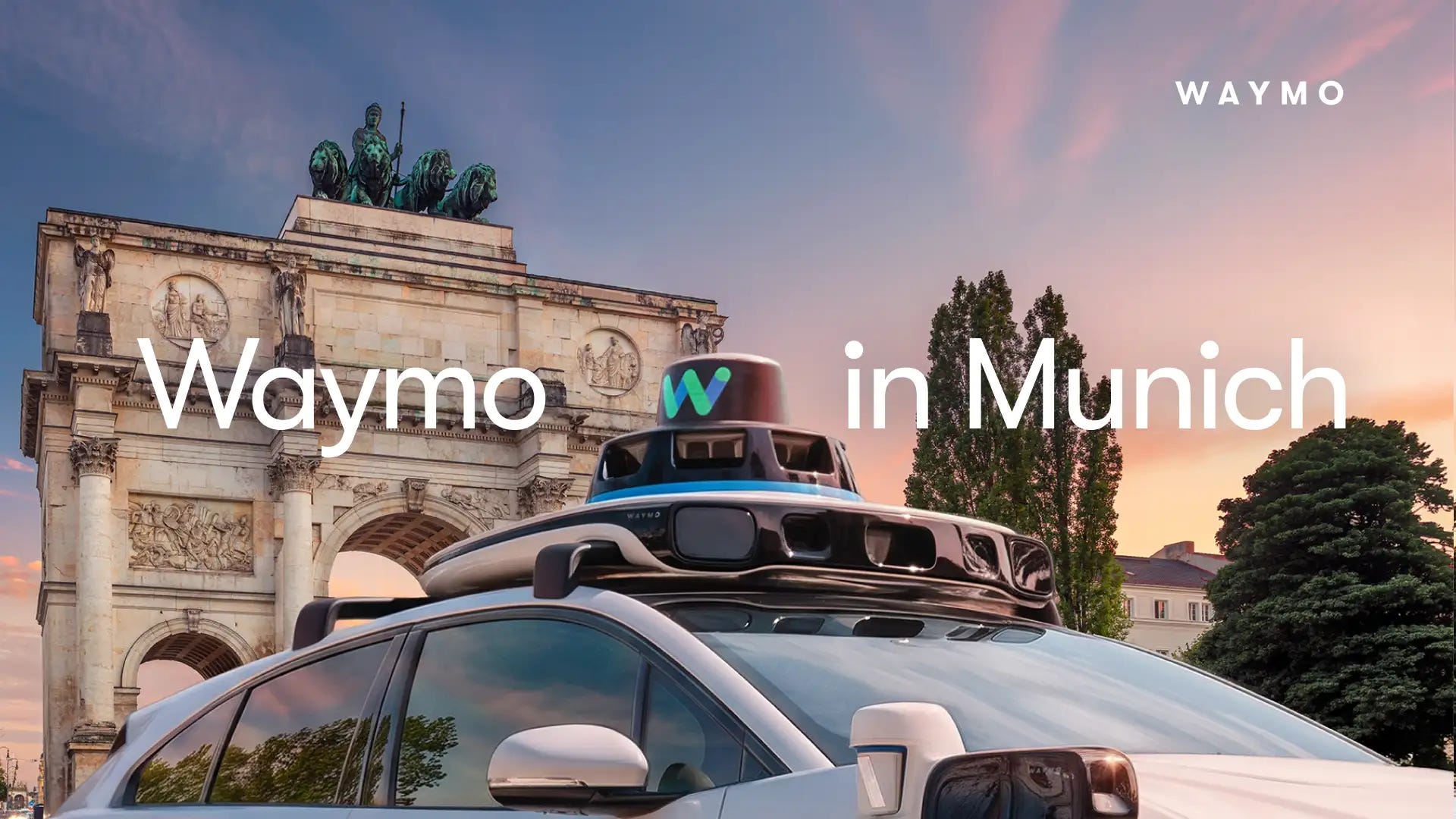
Waymo planning Munich robotaxi service, public launch end 2027
→ Follows 11-city expansion playbook: manual mapping → testing with safety drivers → employee/guest access → public launch
→ Why Germany’s 5-year-old Level 4 framework attracts competitors (Mobileye, VW testing) vs London battleground with Wayve, Uber, Baidu
NVIDIA closes in on Hugging Face acquisition for $12.9B! 🤗
NVIDIA has agreed to buy Hugging Face for $12.9 billion, according to The Information. Business Insider, which first reported the takeover interest over the weekend, says the talks value the company at more than $13 billion but haven’t produced a signed agreement yet and could still fall apart. Neither company has commented, which is notable in NVIDIA’s case since it usually moves fast to correct reports it thinks are wrong.
Hugging Face, founded in 2016, is the main place developers share and download open-source AI models. Owning it would give NVIDIA a foothold in open-source AI at a moment when Nvidia’s chip dominance looks less secure than it did. OpenAI, Google, Amazon, and Anthropic are all building their own AI chips to reduce their dependence on Nvidia. A healthy open-source ecosystem gives customers alternatives to those closed labs, and those alternatives mostly run on Nvidia hardware. That’s the same logic behind NVIDIA already pouring tens of billions into its own open-source models.
Hugging Face CEO Clem Delangue has been publicly aligned with Nvidia’s open-source push all year. On CBS’s “Face the Nation” this month he described using an NVIDIA-modified version of a Chinese open-source model to defend against a cyberattack, and pointed to a letter signed by Jensen Huang and 24 other companies urging Washington to support open models rather than restrict them. In a CNBC interview in late July he warned that China is clearly dominating open-source AI.
There are other angles. Nvidia scaled back its DGX Cloud business about a year ago, and Hugging Face already helps developers run models on rented compute, offering a way back into that market. Nvidia has also promised to cover the cost of tens of billions in cloud deals for customers, and could resell unused capacity to Hugging Face’s users.
The price is a big jump. Hugging Face last raised $235 million in 2023 at a $4.5 billion valuation, in a round led by Salesforce Ventures with participation from GV, IBM Ventures, and NVIDIA. It also turned down a $500 million investment from NVIDIA late last year at a $7 billion valuation, saying it didn’t want a dominant investor swaying its decisions. Revenue is around $150 million a year, up from roughly $100 million two months earlier, and Delangue told TechCrunch last month the company is close to profitability. A $13 billion price would be a steep multiple on that, but a hard one to walk away from.

Figure comes out of stealth with Index, its physical data collection network! 📱
Figure has unveiled Index, an app-based pipeline for collecting robot training data from people around the world. The argument behind it is that the data needed to scale a general purpose robot doesn’t exist on the internet. It has to come from the real world, sampled across as many environments as possible.
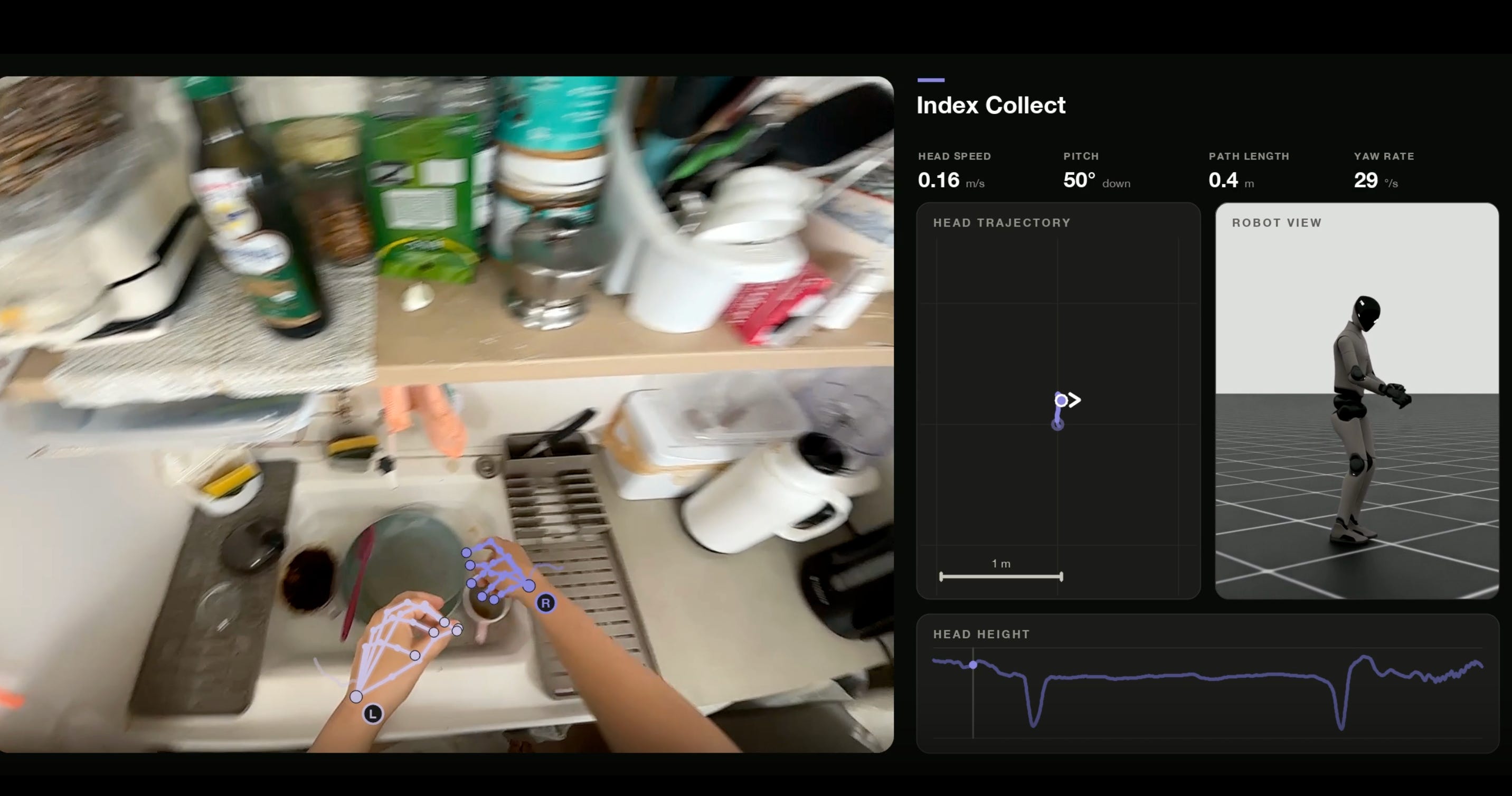
The numbers from four months in stealth are substantial. Index has crossed 264,000 downloads across 108 countries with over 44,000 weekly active users. Creators, as Figure calls them, have uploaded more than 16 million videos. The app processes 30 minutes of video uploads every second, which works out to 4.9 years of human work uploaded daily. Figure has paid out $15 million to Creators so far and says it will spend over $1 billion on data and compute over the next 12 months.
Figure tried buying data first. Vendors couldn’t hit the throughput, diversity, or quality bar its Helix AI stack needed, so the company built the pipeline itself. Per 1,000 hours collected, Index contains 373 unique tasks, 1,146 unique manipulated objects, and 116 unique environments. The diversity comes from the people generating it: every new Creator brings an unfamiliar environment, unusual objects, and their own way of doing things. Figure says it has collected tasks as obscure as cleaning kitty litter, changing oil, and busing restaurant tables, alongside cooking, laundry, and work inside logistics centres, restaurants, factories, and offices.
Ingesting that much video meant rebuilding the data infrastructure around consumer app constraints: 24/7 availability, continuous large-scale compute, and real-time feedback to users. The pipeline runs five stages. Automated filters screen for technical, visual, and semantic quality. Human analysts audit samples at the user level for deliberate evasion attempts. Videos are embedded and discarded if they’re too similar to existing data. What remains gets rebalanced using task quotas and embedding-based clusters. Finally, hierarchical text captions are generated for every episode.
Anyone can sign up as a Creator and record tasks in their own home or workplace, or book a Creator through the app to come do chores at their house or business. Figure frames this as groundwork for ordering robots as a service: today a person comes to clean your house, eventually a robot does it.
SoftBank in talks to buy majority stake in 1X at $6 billion valuation! 💸
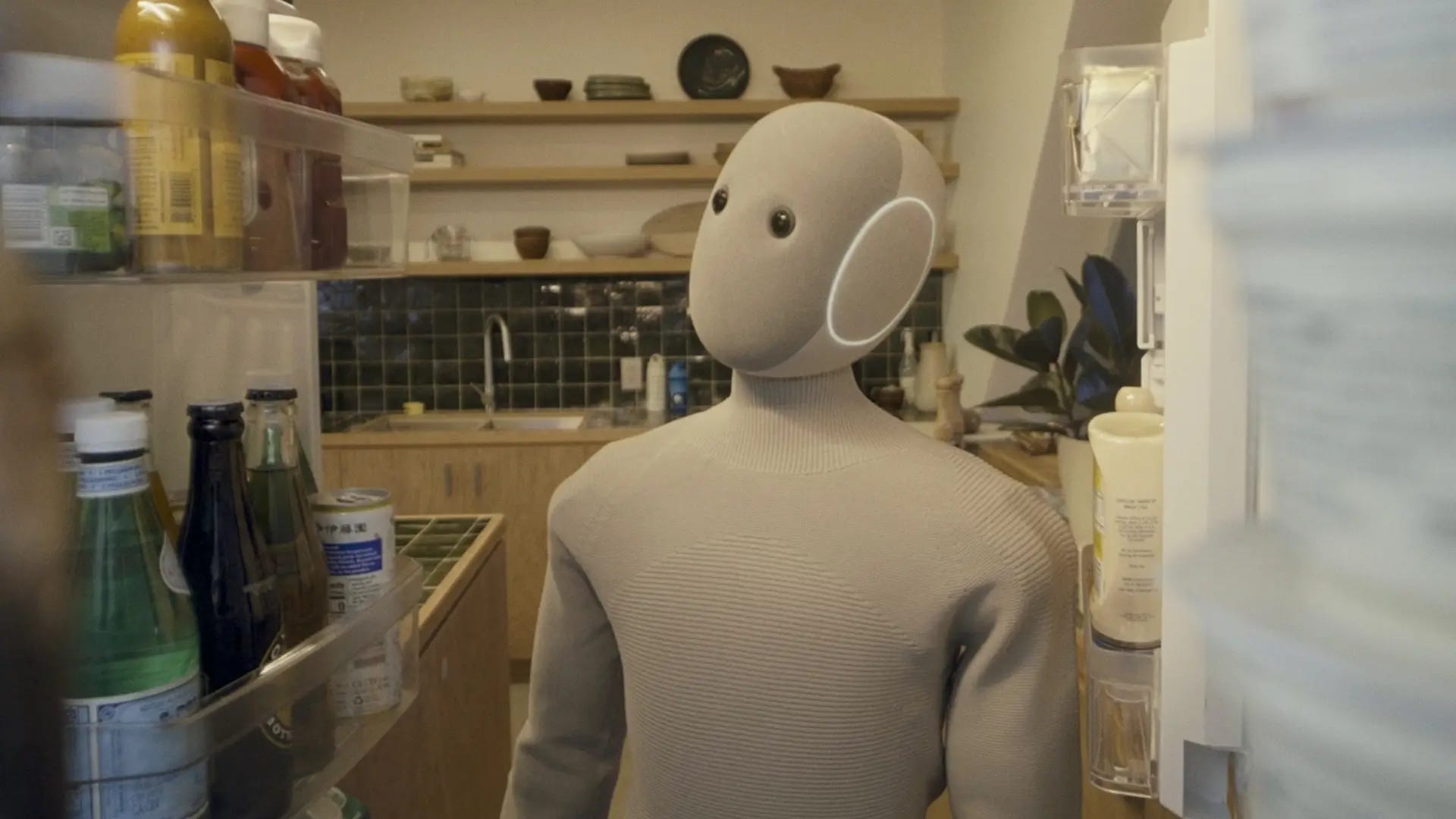
SoftBank is in talks to take a majority stake in 1X Technologies at a valuation of roughly $6 billion, according to The Information. A completed deal would hand Masayoshi Son controlling interest in one of the most prominent bipedal platforms in the West, and would mark a defining moment for 1X as it tries to move from research prototypes to hardware in people’s homes. Neither company has commented.
Last September, 1X was reported to be seeking up to $1 billion at a valuation of $10 billion or more. Against that, $6 billion reads as a markdown, but the comparison needs a caveat: the $10 billion was an ask that was never confirmed to have closed, and a majority purchase is priced differently from a minority round. Control usually trades at a premium to the venture mark, not a discount. What surrendering a controlling interest buys 1X is balance sheet stability, which matters when you’re funding low-volume production lines in Hayward, compute for the 1X World Model Lab, and support and logistics infrastructure ahead of NEO deliveries.
The reporting leaves the most consequential terms unaddressed. How large is “majority”? A 51% position and an 80% position mean very different things for 1X’s independence. Is $6 billion pre- or post-money? Is the money primary capital funding the company, or secondary cashing out existing holders? Is OpenAI, 1X’s earliest institutional backer, selling? And does founder Bernt Børnich keep operational control? None of it is public.
For SoftBank, the deal fits a broader consolidation of the robotics supply chain around what it treats as a split between brains and bodies. After selling its remaining Boston Dynamics stake to Hyundai for $325 million this summer, SoftBank anchored a $1.4 billion Series C in Skild AI for foundation models, bought ABB’s robotics division for $5.4 billion, and is reportedly in talks to anchor an $800 million round for Agile Robots. NEO covers the one category ABB’s arms can’t reach: compliant, quiet, tendon-driven hardware built to operate around people in unstructured homes.
The strongest argument that $6 billion undervalues 1X is demand. When preorders opened in October 2025 at $20,000 outright or $499 a month, the company reportedly sold out its entire first year of production in five days. The strongest argument the other way is that none of it has shipped. 1X promised initial NEO deliveries in 2026, and it’s now late August with no customer deliveries publicly confirmed. Closing that gap is exactly what SoftBank’s money would pay for, and exactly what makes the timing of a control deal worth watching.
Skild AI introduced S1: show it a video, and the robot does the task! 🎬
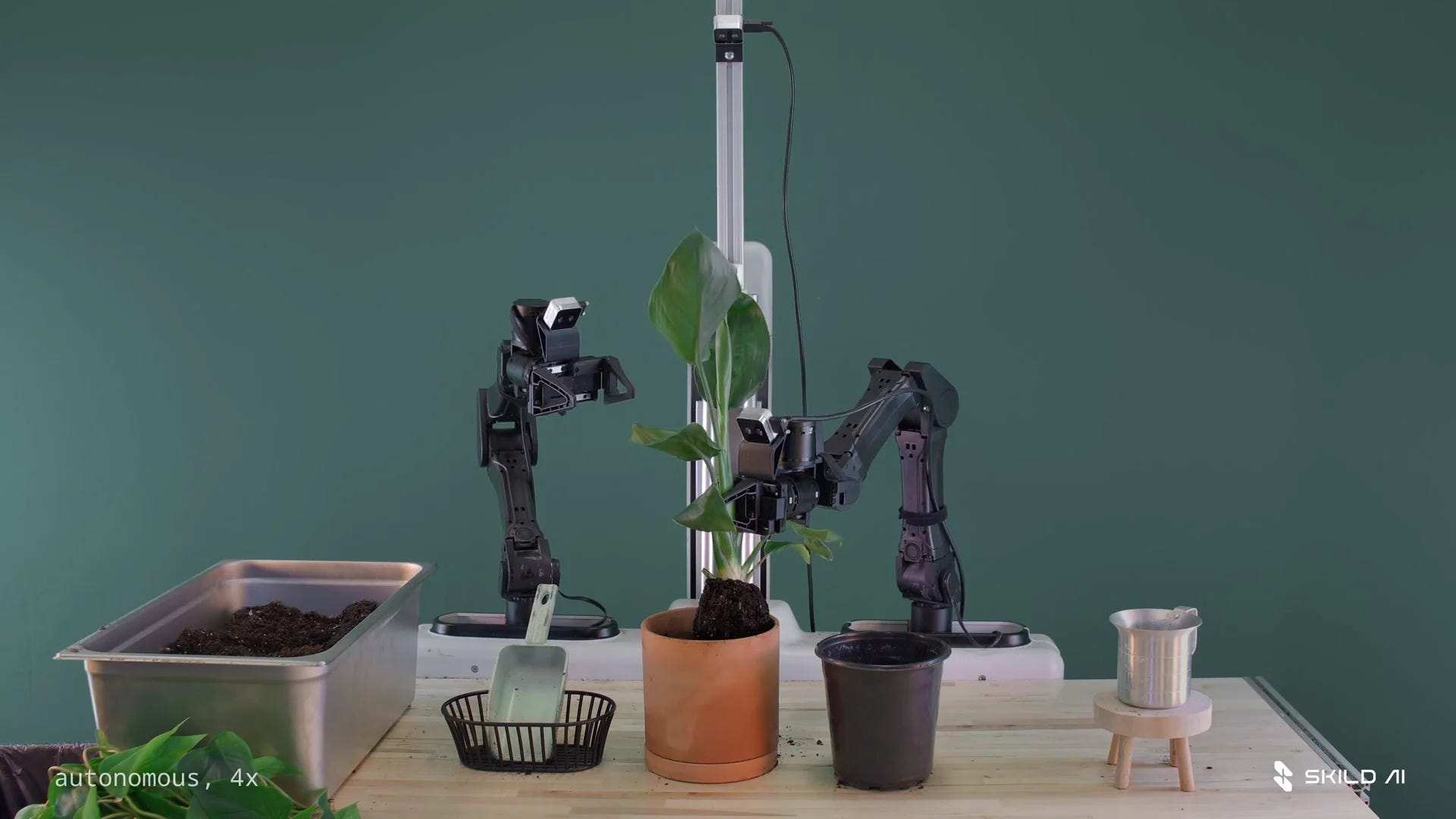
Skild AI has released S1, a robot foundation model built around in-context learning. Show it a video of a task, short or long, seen or unseen, and it executes. No fine-tuning, no post-training. One set of weights produced every result in the company’s announcement.
The framing is a comparison to language models. Skild argues robotics has been stuck in the BERT era, where each new application demands more data collection and another fine-tuning run. The shift from those early models to ChatGPT came from in-context learning, or prompting: a user introduces a novel concept through the prompt and the model handles it without touching the weights. Skild thinks that’s the whole point of pre-training in robotics too. Notably, S1 uses video demonstrations rather than language to specify tasks. Language works fine for atomic actions like “hand me the mug,” but nobody learns to fold a fitted sheet or whisk egg whites to stiff peaks from a sentence.
The headline results are on long-horizon tasks the model never saw during training: plant potting, pancake cooking, pour-over coffee, and kit assembly. These run up to ten minutes, span dozens of steps, and are driven by a single visual demonstration. S1 dug into soil to make room for a plant, pressed a coffee filter into a funnel, and flipped a pancake. Skild says this is the first time a robotics foundation model has shown in-context learning on tasks this long that weren’t in the pre-training set. For the plant potting task, the supplies arrived at the office at 8:54 PM and S1 was executing autonomously by 9:27 PM. The gap between recording the demonstration and autonomous execution was 11 minutes.
The scaling study is where the case gets made. Skild trained both in-context and language-conditioned policies on identical data and compute, from 1k to 100k hours. On tasks the models had seen, the two end up close: 96% for ICL against 89% for the language-prompted VLA. On unseen tasks the gap is enormous. At 100k hours, language prompting reaches 9% while ICL hits 66%. Expressed differently, one video demonstration is worth roughly 380 post-training episodes, which for tasks over four minutes means 50 to 100 hours of teleoperation.
Several behaviors emerged that weren’t explicitly trained. S1 kept working when objects were slid away mid-approach, swapped out, or the lighting changed. It retried after failures rather than blindly proceeding. When a prompt showed watering a plant with a watering can but only a cup was available, it used the cup. And it sometimes improves on flawed demonstrations: in one prompt the demonstrator dropped an egg and made a mess, while S1 did the same step with a controlled motion. It treats the demonstration as a specification of the goal, not a trajectory to copy.
Waymo robotaxis are headed to Munich! 🥨
Waymo plans to launch a robotaxi service in Munich, months after setting up an entity in Germany. It still has mapping, testing, and regulatory hurdles to clear before commercial operations can begin.
The rollout follows the same sequence Waymo has used in the other 11 cities where it operates commercially. First it manually drives its vehicles to map the streets. Then it tests autonomous vehicles with human safety drivers, before removing them. At that stage it usually opens rides to employees, media, and invited guests, then to limited public service, and finally to all riders once regulators sign off. Waymo says it’s working with Germany’s Federal Motor Transport Authority (KBA), state authorities, and local officials, and expects commercial ride-hailing to open to the public toward the end of 2027.
Germany was the first EU country to create a legal framework for Level 4 autonomous driving, adopting the legislation more than five years ago. That has made it a hotspot for AV testing, with Mobileye and Volkswagen among the companies holding permits. Most permit holders, including Wayve and Autobrains, are at Level 3, where the system handles driving in specific conditions but a driver must be ready to take over. Waymo currently holds no permits in the country.
Germany isn’t the only European battleground. London is shaping up as another one, with Waymo planning a commercial service there in 2026 that would put it against Wayve and Uber. Baidu has also begun testing in the city through its partnership with Lyft and Freenow.