
EP.86 LONDON-BASED HUMANOID MAKER WITH NEW MODEL
Zipline gets funding for drone deliveries in Africa, SoftBank collaborates with Yaskawa on physical AI & much more...

UK startup Humanoid reveals its legged robot 🦿
Humanoid, a new robotics company from the UK, has introduced the HMND 01 Alpha, a bipedal robot that reached stable walking only two days after final assembly. The team built the entire prototype in just five months, showing how fast humanoid development is accelerating.
The speed came from a simulation-heavy workflow. Using NVIDIA Isaac Sim and Isaac Lab, the robot was trained on 52.5 million seconds of virtual locomotion — work that would normally take well over a year. After that, Alpha needed only 3.2 million seconds of on-robot training before taking its first real steps.
Alpha is 179 cm tall with 29 joints, can handle 350 N pushes, and carries up to 15 kg with both arms. It supports either five-finger hands or simple grippers. For perception, it uses six RGB cameras, depth sensors, and a microphone array. An NVIDIA Jetson Orin AGX and Intel i9 power onboard compute, and a swappable battery gives roughly three hours of runtime.
The robot can walk, turn, run, squat, hop, and recover from force in any direction. It can also work with other robots, manipulate objects, and communicate using screens, audio, and LEDs.
Humanoid is targeting industrial work first, manufacturing and logistics, with an eye toward home assistance in the future. Its modular design means hands, arms, or external coverings can be upgraded without redesigning the whole machine.
Alpha builds on Humanoid’s earlier wheeled platform and is positioned as a practical, adaptable robot built for real work, not just showcase demos.
Nebius Physical AI Awards 🤖📍
The Nebius Robotics & Physical AI Summit and Awards takes place on December 9 in Mountain View, bringing together many of the operators, researchers, and investors pushing robotics from demos to real deployment.
Speakers include:
Jonathan Hurst (Agility Robotics)
Robert Nishihara (Anyscale)
Adrian Macneil (Foxglove)
Charles Wong (Bifrost AI)
Kevin Black (Physical Intelligence)
Amit Goel (NVIDIA)
Investors from Shanda Grab Ventures, Radical Ventures, N47, Khosla Ventures, BMW Ventures, and Accel will also be in the room.
Topics span autonomy architectures beyond “LLMs + actuators,” the rise of simulation and synthetic data, and where leading VCs are placing bets across the Physical AI stack.
For robotics builders and investors, it’s one of the most relevant gatherings of the year. Attendance is invite-only — apply and mention “Lukas” on your registration.

SoftBank and Yaskawa team up to develop “physical AI” 🧠
SoftBank and Yaskawa Electric have announced a new partnership to build “physical AI” systems aimed at office and service environments, spaces that traditionally challenge robots because of clutter, people, and constantly changing tasks.
SoftBank defines physical AI as robots that can interpret sensor and camera data, make decisions with AI models, and then execute flexible physical actions. Instead of single-purpose machines, the goal is to create robots that can switch between many tasks and handle environments where unpredictability is the norm.
Japan’s shrinking workforce is one driver. Offices, hospitals, schools, and retail spaces all need automation, but they require robots that can adapt quickly rather than follow rigid scripts. That’s where the two companies say they can combine strengths.
Yaskawa is contributing a mobile manipulator based on its MOTOMAN NEXT arm, known for safety and precise motion control. SoftBank is providing AI-RAN, its communications system that blends AI with radio access networks, plus edge computing and building management integration to give robots real-time environmental awareness.
In their first joint use case, the companies built a virtual office environment to test a robot that tracks facility data, manages supplies, and coordinates tasks. SoftBank’s vision-language model (VLM) converts sensor data into high-level instructions, while Yaskawa’s vision-language-action (VLA) model turns those instructions into specific robot motions.
The companies say this approach could enable “multi-skilled” robots, a single machine capable of handling many roles inside a building. They plan to expand the collaboration to broader office and social robotics applications.
Meme of the week 🤖
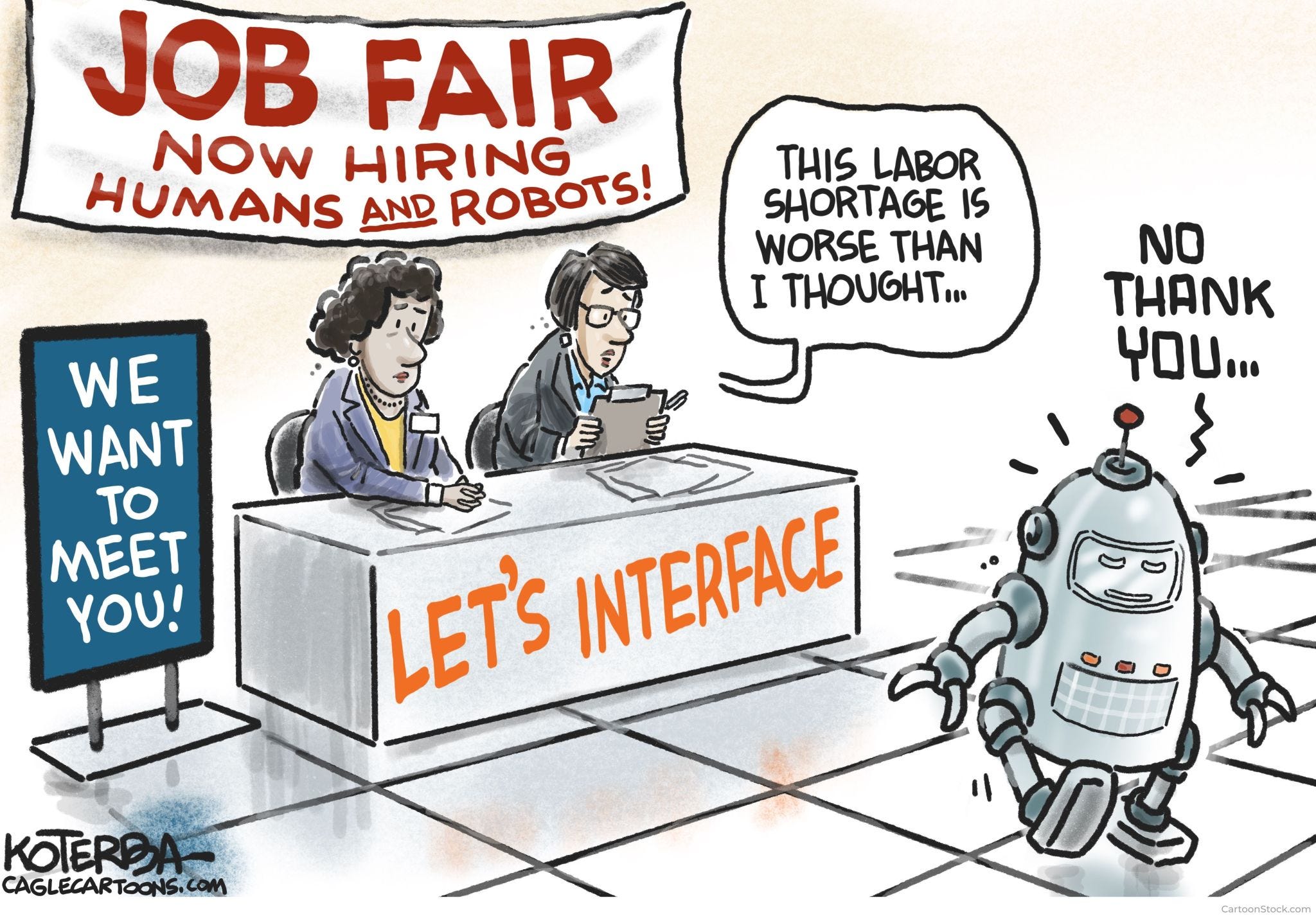
Chinese humanoids raises $140M Series A! 💰
ROBOTERA, a fast-growing Chinese robotics company, has raised nearly RMB 1 billion (~$140M) in Series A+ funding and signed a new strategic partnership with the United Nations Industrial Development Organization (UNIDO).
Founded in 2023, ROBOTERA is building general-purpose robots that learn and adapt through real-world interaction. Its product lines include bipedal humanoids, wheeled service robots, and dexterous robotic hands. The company says its systems are already deployed at nine of the world’s top 10 tech companies.
ROBOTERA’s humanoid platform has shown strong performance in varied conditions, including autonomous walking in snow. It also set jumping records at the 2025 World Humanoid Robot Games with a 1.47 m long jump and 95.64 cm high jump. Its XHAND 1 dexterous hand, designed for reinforcement learning research, can manipulate over 100 tools and is widely used in labs worldwide.
The agreement signals growing global interest in embodied intelligence and positions ROBOTERA as a key player in next-generation robotics.
Zipline with $150M to scale medical drone delivery! 🚁
The U.S. Department of State is partnering with Zipline, committing up to $150 million to help the drone delivery company expand its medical logistics network across Africa. The funding uses a pay-for-performance model, the U.S. releases money only when African governments sign expansion contracts and commit to long-term usage.
Zipline said the partnership could triple its coverage, growing from 5,000 to 15,000 hospitals and health facilities, and give up to 130 million people near-instant access to blood, vaccines, and essential medications. African countries will pay up to $400 million in utilization fees as part of the expansion.
Zipline’s impact is already significant: in regions where deliveries once took 13 days, drones now complete them in under 30 minutes. Facilities gain reliable access to stocked “remote pharmacies,” helping eliminate stockouts and reduce waste from spoiled supplies.
Each new Zipline hub is staffed entirely by local employees, creating skilled jobs and strengthening health infrastructure. Nigeria’s health minister highlighted improvements in treatment rates and healthcare access across the country’s three existing Zipline-served states.
Since launching in 2016, Zipline has completed 1.8 million autonomous deliveries across four continents, all without safety incidents. With this new U.S. backing, its logistics network is set to become one of the largest and most impactful autonomous delivery systems in the world.

King Nat Rothschild Mason Queen Demet Konak Rothschild
Outstanding roundup of where humanoid development is actualy hitting escape velocity. The Humanoid startup achieving stable walking in two days after assembly is the headline, but the real shift is how simulation colapsed what used to require years of physical prototyping into 52.5 million seconds of virtual training. That compression means hardware iteration becomes the bottleneck rather than training cycles, which inverts the traditional robotics development model entirely. One question: with modular gripper systems aimed at industrial logistics first, how are teams validating sim-to-real transfer for precision manipulation tasks thatrequire warehouse-specific object handling?